





Corteq Solutions Client Work: How I embedded AI recommendations, seamless human handoffs, and personalized flows into a grocery app experience for a mid-size regional chain.
Role
Product Designer
Team
Product & Engineering
Duration
14 weeks
End to End Design Process of Smart Cart
Project Overview
Problem: Shoppers felt overwhelmed by generic product listings. AI capabilities existed in the backend but weren’t surfaced meaningfully in the app.
Goal: Design a shopping experience where AI feels helpful — not intrusive — at every moment, with graceful escalation to human support.
My Focus: Translate data science models (recommendations, intent detection, cart analysis) into real interface moments shoppers actually want.
Research Findings
I ran contextual interviews with 12 grocery shoppers aged 28–55, mapping pain points across the full shopping journey. The clearest pattern: people didn’t distrust AI, they distrusted AI that felt random or pushy.
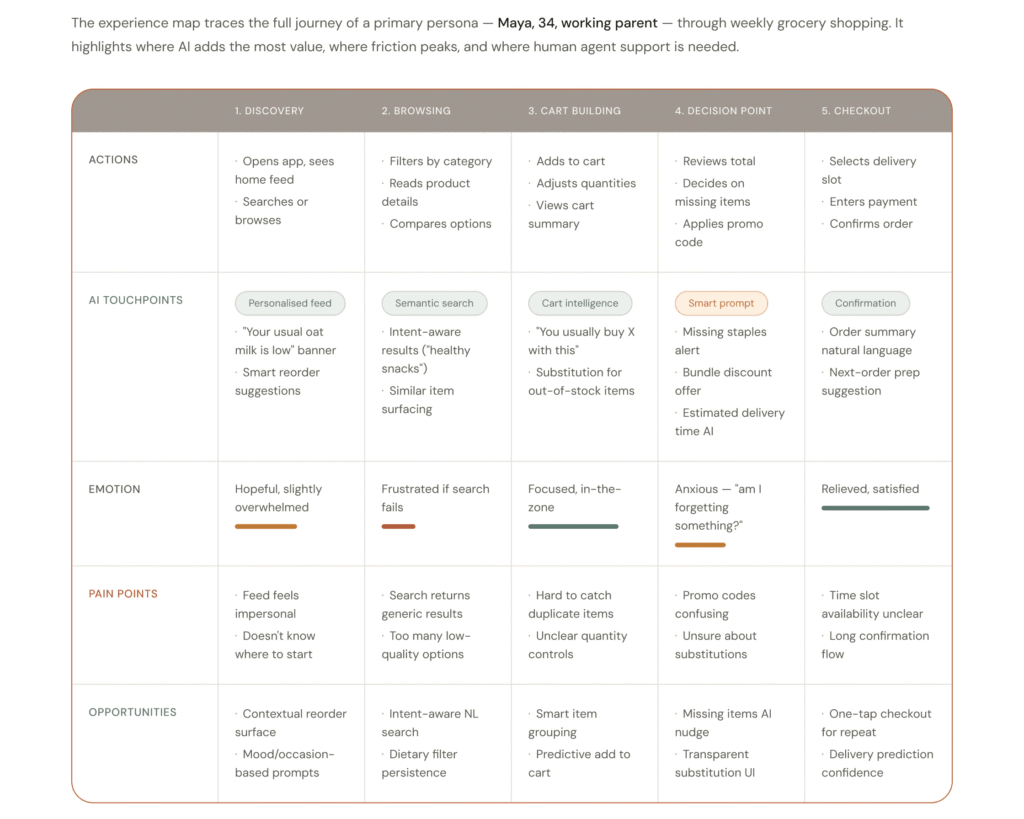
Experience Map
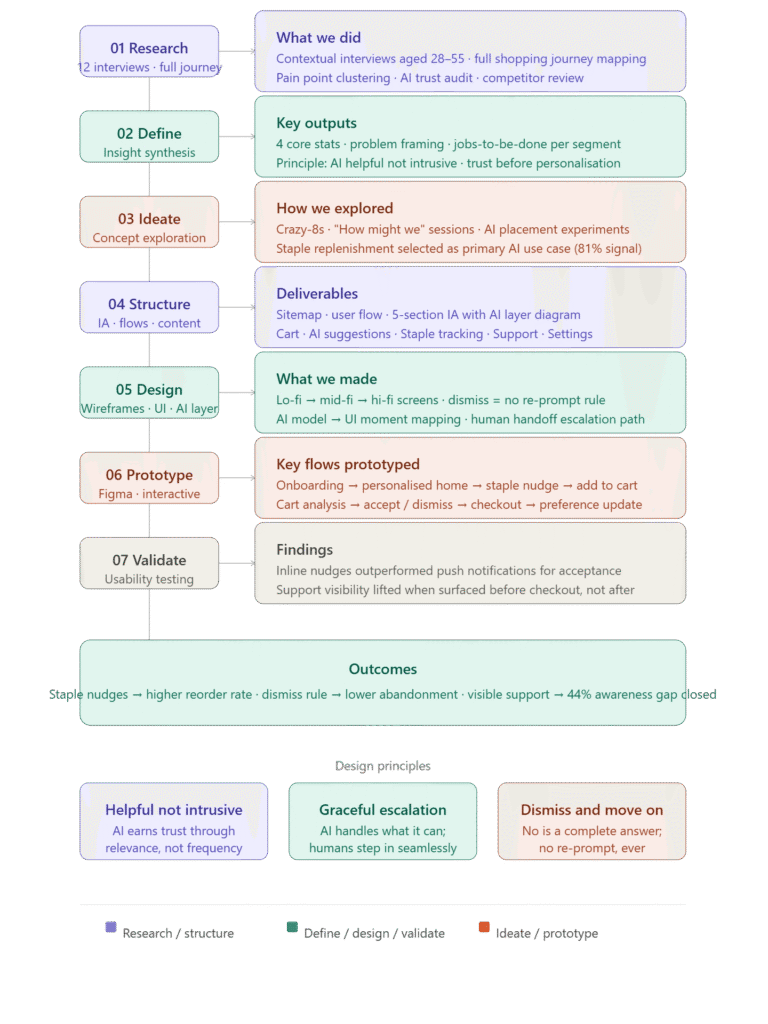
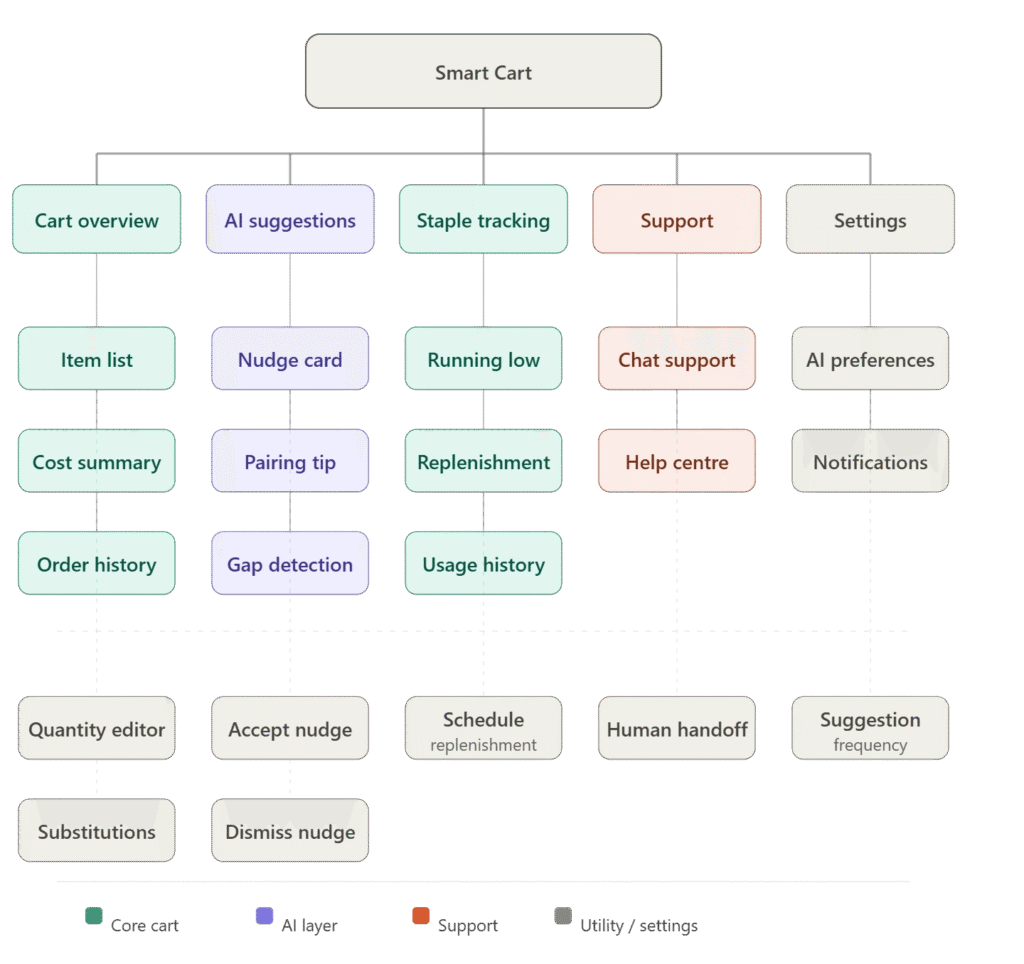
Information Architecture
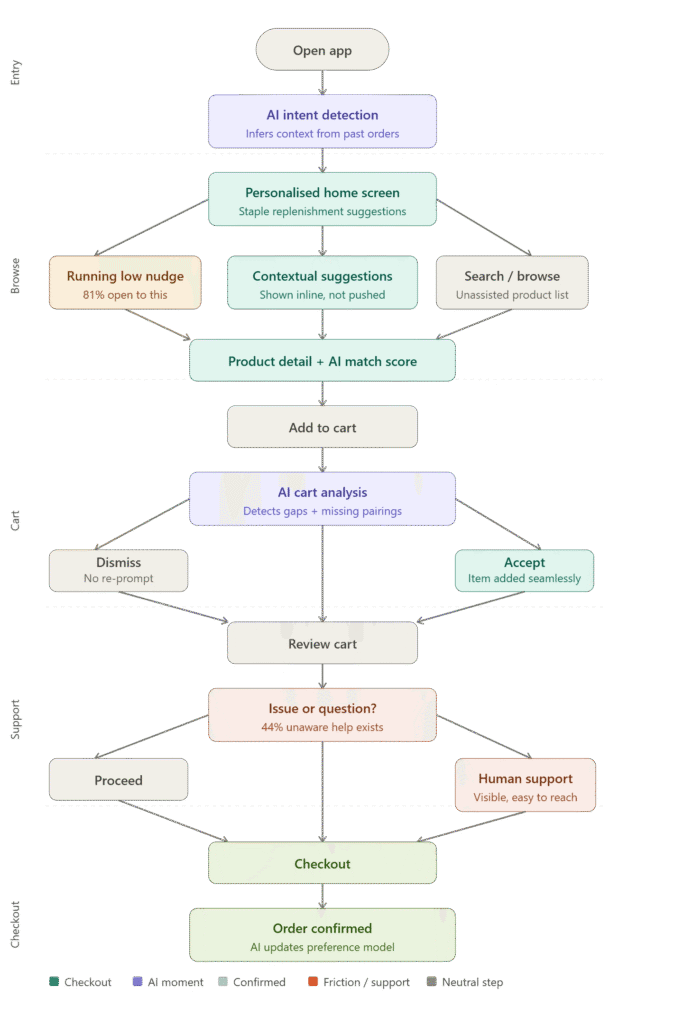
User Flow
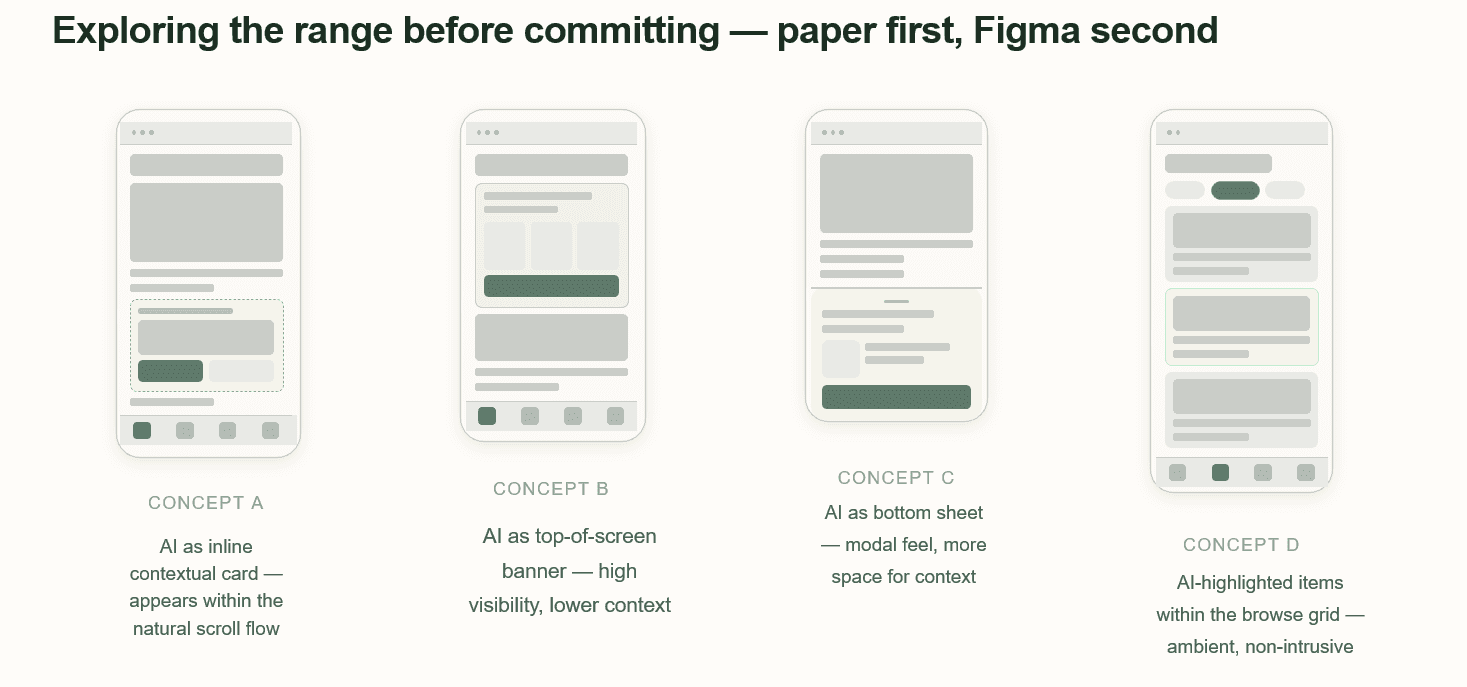
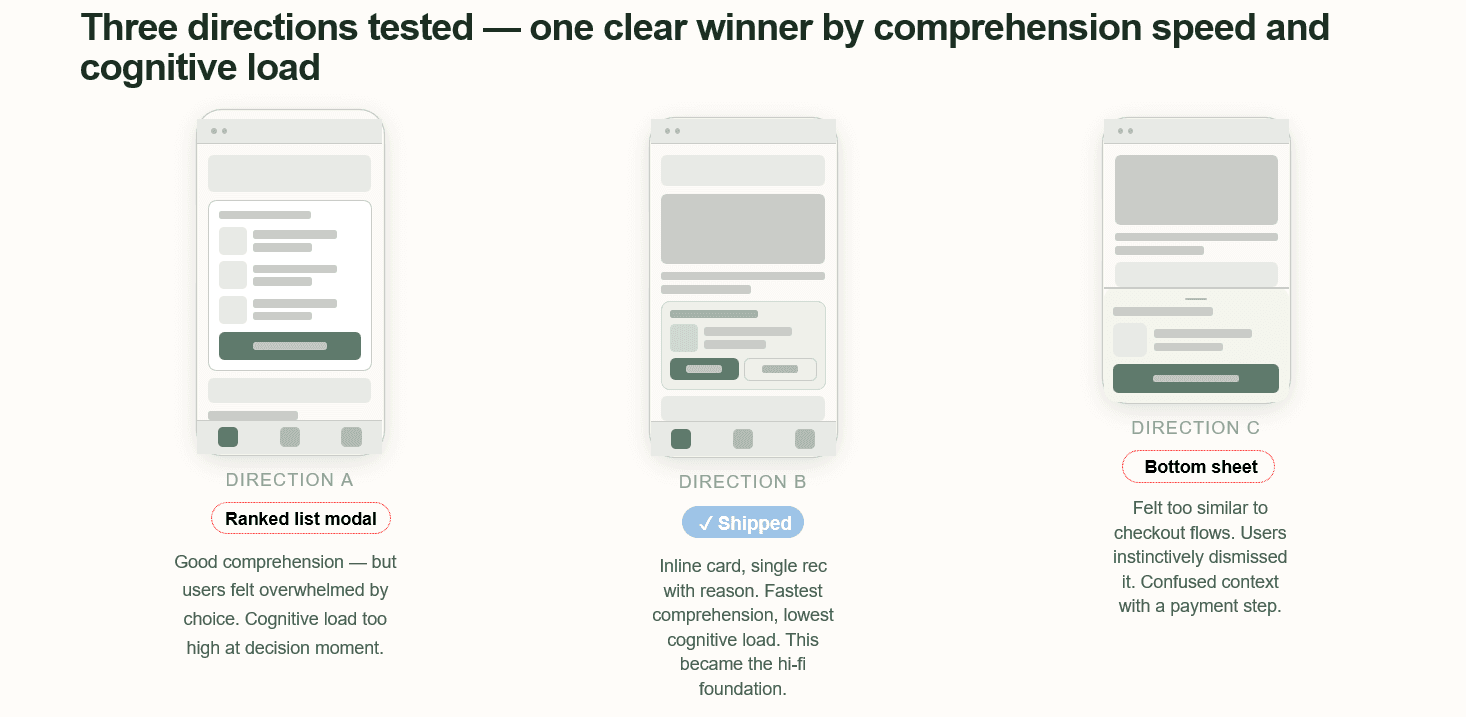
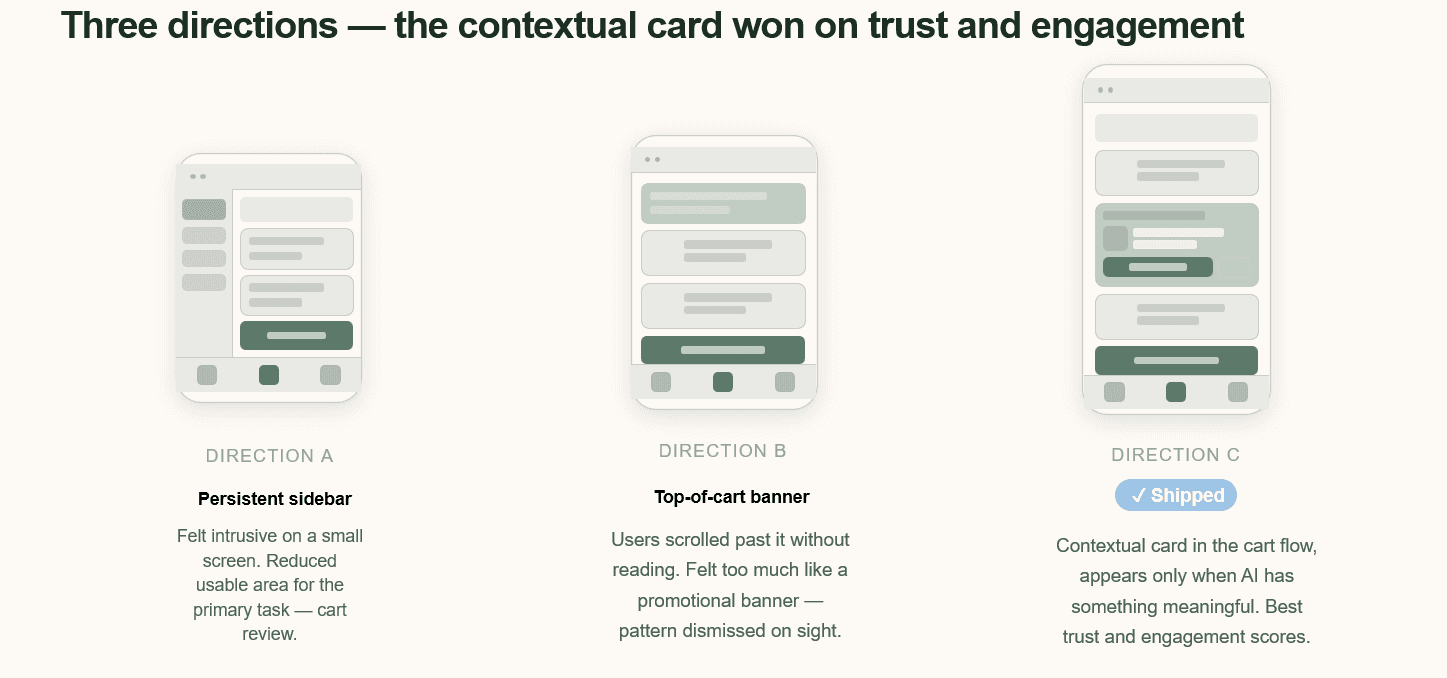
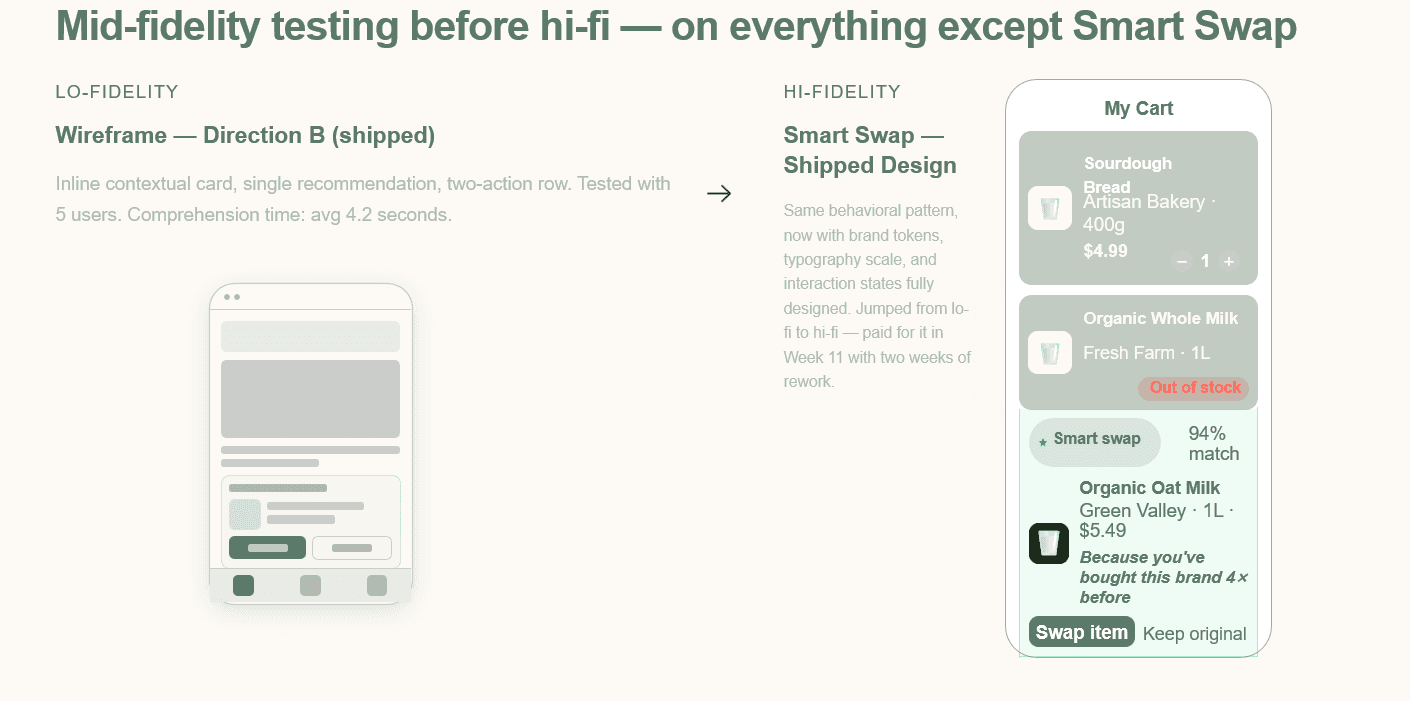
Wireframes
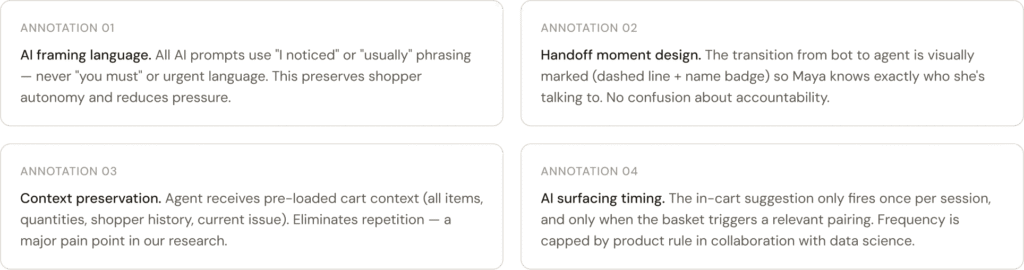
Design Decisions & Annotations
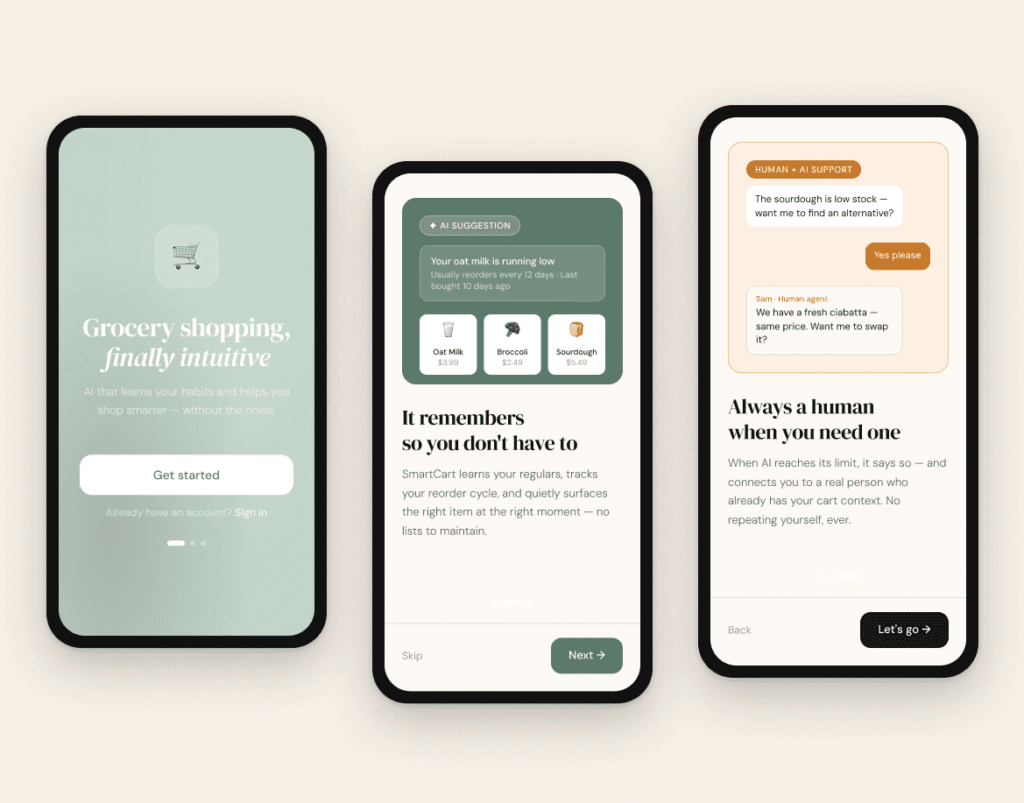
Three screens that show the core AI touchpoints in the interface. Annotations explain the design rationale behind each AI decision surface.
Outcomes
What I learnt
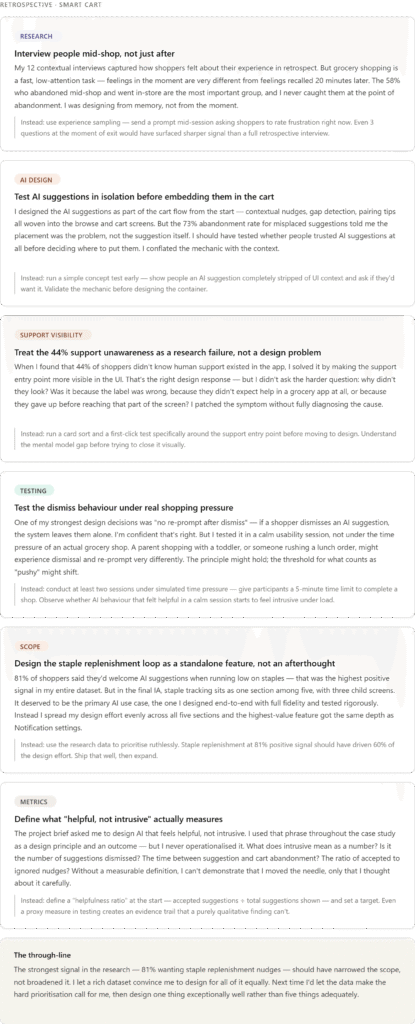
The biggest shift in this project wasn’t visual, it was knowing when to surface AI. The experience map was the most valuable tool I used: it forced every team member to think about the emotional state of the shopper at each step, not just the technical capability of the system.
The human handoff design was the detail that got the most positive feedback in testing. Shoppers said they felt “respected” when the AI admitted its limits and connected them to a person who already had context. That moment of honest AI behavior became the design principle I used across every other touchpoint.